In the industry of fashion, the Rapidity is essential. Brands Need to Produce High quality visuals In record time to keep up with rapidly changing trends. To achieve this, a Smooth Coordination Between creative teams, photographers, stylists and marketing departments is essential in order to ensure consistency across all digital platforms.
Consider a common use case: a major fashion retailer producing its content without a management tool. Its workflows slow down, metadata is often incorrect, and brand consistency gets lost from one distribution channel to the next. Operational inefficiency keeps it from producing visuals quickly, leading to frequent delays and missed deadlines.
A sector in search of speed
In a Market Too vibrating Than fashion, brands must continuously renew their content to support product launches, promotional campaigns and digital marketing actions. In the United States, fashion brands are facing numerous slowdowns related to approval processes, communication errors, and delivery delays, all of which are affecting their Competitiveness.
To ensure a Effective Content Production, it is essential to combine Speed of Execution And Operational flexibility. Without a dedicated tool, a retailer in this situation faces several difficulties that weigh on its efficiency and delay the launch of its online campaigns.
The Main Difficulties Before Automation
Slow Production for Seasonal Campaigns
- Marketing opportunities were lost because content creation did not keep pace with the market.
- Manual planning processes, lengthy validations, and communication errors exceeded Timeframes.
Lack of workflow automation
- The Renaming Files, metadata tagging and validation tracking were managed manually, continuously down the entire process.
- Human intervention in metadata management increased the Risk of errors, making asset management more complex.
Lack of brand consistency across channels
- Without a centralized platform, marketing, e-commerce, and social media teams were struggling to ensure a Homogeneous image.
- Format differences between platforms caused delays and frequent revision requests.
Metadata and Labeling Errors
- Entering metadata manually generated numerous errors and complicated theFile Access.
- Asset tracking became ineffective due to incorrect or inconsistent labels.
Lack of coordination between teams
- Creative teams, photographers, and marketing teams worked in silo, leading to file losses and communication difficulties.
- The lack of a centralized system required the use of email exchanges, spreadsheets, and various storage systems.
The lack of optimized production processes led to High costs, increased slowness and missed opportunities for the business.
The Solution: How ShotFlow Transformed the Express Workflow
To become more productive, the retailer can rely on ShotFlow, an automation solution designed to optimize workflow management and structure operations. With this system, content production becomes faster, better organized and better integrated across teams.
1. Automating workflows with process models
- ShotFlow provides workflow templates for a standardized execution of each project.
- File renaming, metadata tagging and approval tracking are automated, which reduces repetitive tasks.
Impact:
- Fewer metadata errors
- Better visibility and monitoring of assets by teams.
2. Acceleration of uploads thanks to optimized planning
- Automated scheduling tools streamline content creation and limit last-minute interruptions.
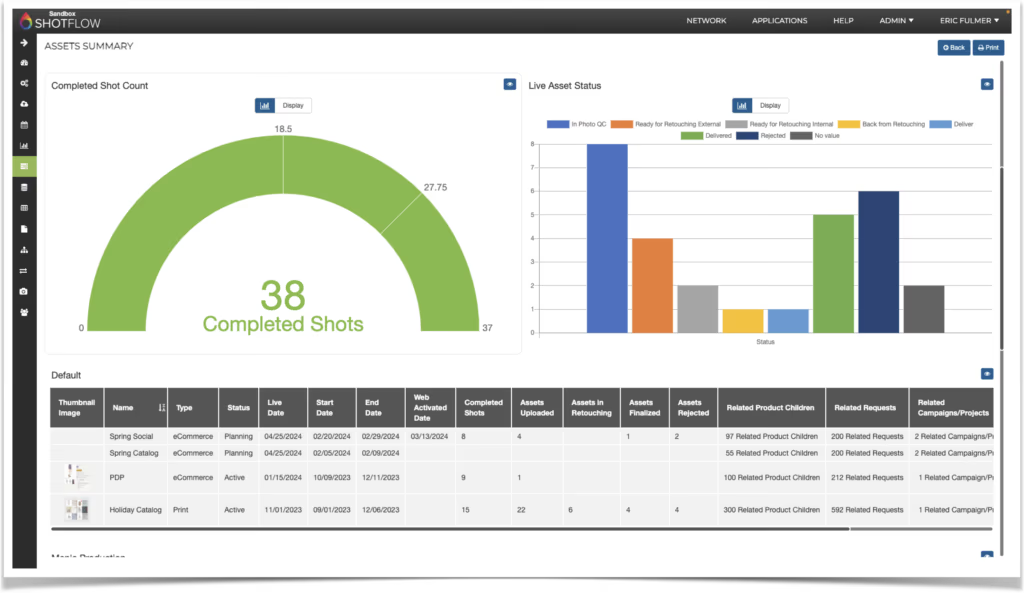
- A real-time dashboard gives teams live tracking of photo shoots.
- Automatic alerts speed up the approval process.
Impact:
- Faster approvals.
- Seasonal campaigns launched sooner.
3. Standardization of branding for marketing and e-commerce
- ShotFlow keeps visuals consistent by automating formatting and the application of brand guidelines.
- Each online product can come with suitable marketing content.
- Artificial intelligence enables automatic image tagging.
Impact:
- Improving the customer experience through a more consistent brand image.
4. Better collaboration between teams thanks to real-time visibility
- A centralized dashboard lets teams monitor each project live.
- Photographers upload their images instantly to make them available to publishers and marketers.
- Marketing approves assets directly in the system, without lengthy email exchanges.
Impact:
- Shorter production times and more effective collaboration between teams.
5. Eliminating metadata errors and labeling inconsistencies
- ShotFlow includes an automatic metadata tagging system for accurate identification of images.
Impact:
- Optimized asset management, facilitating access to files in digital databases.
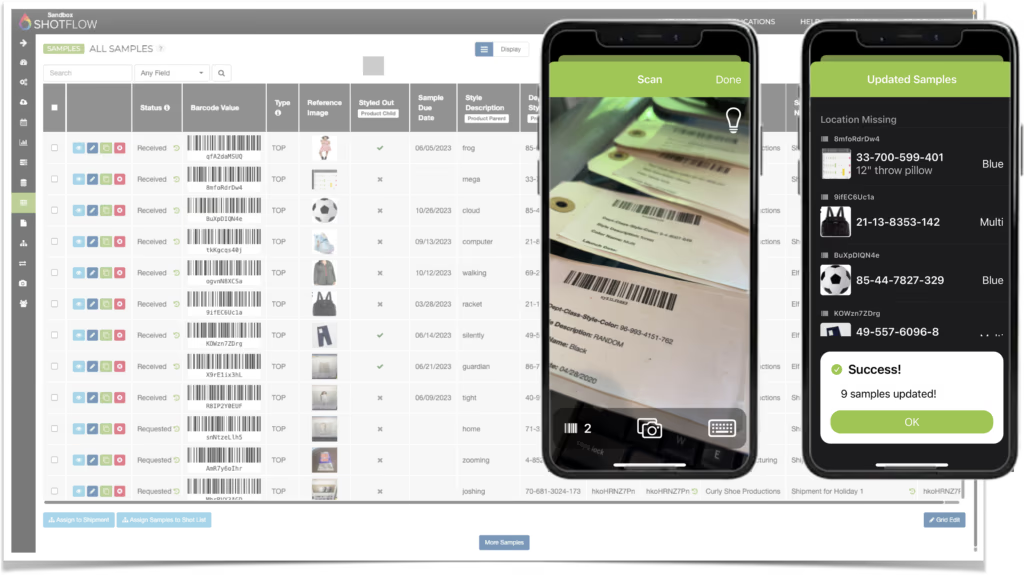
Concrete results: optimized content production
Without a dedicated tool, slowdowns delay campaign launches and weigh on sales. Inconsistent visuals and fragmented internal processes limit team effectiveness.
With a centralized workflow, the expected benefits are:
- Launch seasonal campaigns more quickly
- Better collaboration between creative and marketing teams
Conclusion: Automation at the service of fashion
To succeed in the fashion industry, brands must combine rapidity, precision and operational efficiency. ShotFlow addresses these challenges by improving approval tracking, preserving brand consistency and automating workflows.
With ShotFlow, businesses can deliver their content on time, while maintaining high quality standards. With real-time monitoring, automatic scheduling, and optimized asset management, workflows become smoother and operational costs are reduced.
In a sector that is constantly evolving, brands need solutions Smart and scalable to remain competitive. ShotFlow is the key to faster, more efficient content production. Do you want to optimize your workflow? Learn how ShotFlow can speed up your content production.