Photographing jewelry requires unique precision to capture all of its beauty and its sheen. Diamonds, rubies, sapphires, or emeralds: each precious stone tells a unique story and deserves a tailored approach that fully reveals its natural splendor. Discover how to turn each piece of jewelry into a fascinating visual using modern and effective techniques.
Jewelry photography: a demanding art
Jewelry photography requires particular attention to detail, light, and focus, much more so than conventional photography of large objects. Each piece of jewelry has specific characteristics, such as the brilliance of the stones, the fineness of the setting, or the unique texture of the materials used.
Choosing a specialized photo studio: essential technical criteria
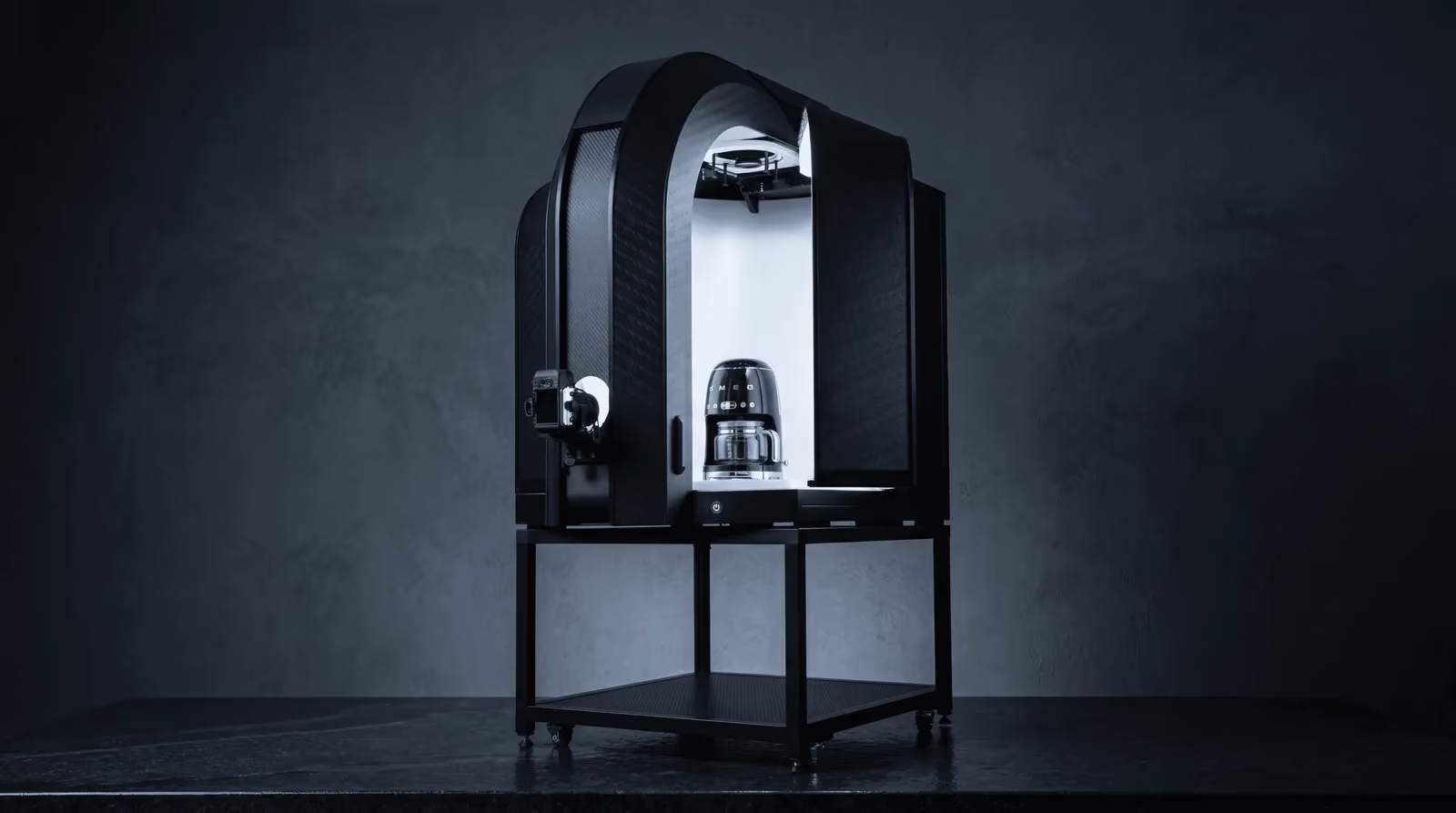
Choosing a suitable studio is crucial to precisely meeting the technical requirements of jewelry photography. Studios specifically dedicated to macro photography and small objects, such as the Orbitvu Alphashot Micro V2, offer several decisive advantages. For example, they allow exact reproduction of shades and hues thanks to accurate color rendering, ensure uniform sharpness over the entire depth of the piece thanks to Focus Stacking technology, and offer precise and adjustable lighting that perfectly controls reflections and sparkle.
Advanced lighting techniques to enhance precious stones
To fully reveal the brilliance of a diamond, a ruby, or an emerald, mastering lighting is indispensable. By using adjustable light sources, you can effectively enhance the essential characteristics of the stones, such as their cut, clarity, polish, and symmetry. Well-controlled lighting can faithfully replicate the brilliance found in high-end jewelry and eliminate unwanted shadows that can hide important details.

Practical tips: succeed in your jewelry photography
A few simple tips can dramatically improve the quality of your photographs. Use a neutral background, such as white or light gray, to better highlight the piece and simplify cutouts in post-production. Adjust your lighting carefully, starting at a low intensity and then gradually increasing it to control reflections. Use light diffusers to avoid overly pronounced reflections on shiny surfaces. To create 360° animations, rotate the piece of jewelry rather than your camera, ensuring a consistent result.
Concrete testimony: Gad & Co and Orbitvu efficiency
To illustrate the benefits of suitable equipment in concrete terms, here is the testimonial of Benzi Gad, marketing manager at Gad & Co, published by Orbitvu:
“Since using Orbitvu, the process has become much more efficient. Today, we easily take more than 100 photos per day, effectively feeding our e-commerce business with consistent quality. The return on investment since the acquisition of the Alphashot Micro has been absolutely exceptional.”
360° animations: enriching the user experience
360° animations offer your customers an exceptional interactive experience. They can fully explore each piece from every angle and use a precise progressive zoom to observe details such as the hallmarks, finish, or setting. These smooth animations are perfectly optimized for e-commerce platforms.
Simplifying post-production: how to optimize your visuals
Thanks to modern software integrated into specialized studios, post-production becomes both fast and intuitive. You can easily make accurate color corrections, adjust contrast and brightness to refine each image, and automate background removal to ensure a consistent, professional look.

Summary of practical tips for successful jewelry photography
- Select equipment that is suitable for macro photography.
- Control the lighting to reveal even the smallest details.
- Use Hyperfocus technology to ensure perfect sharpness.
- Offer interactive animations to significantly improve the user experience.
By applying these tips, you ensure a professional visual presentation that will fully enhance each piece of jewelry, thus making your product catalog more attractive.